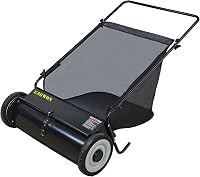
Lawn Sweepers: How to Pick the Right Size and Type
Choose a lawn sweeper by matching its type and width to your lawn, debris and equipment. Push models suit smaller areas, while tow-behind models suit larger lawns with a compatible tractor or riding mower.
On this page (11 sections)
- Which type of lawn sweeper fits your yard?
- How wide should a lawn sweeper be?
- How much hopper capacity do you need?
- What debris will a lawn sweeper collect?
- How do brush height and lawn condition affect pickup?
- Which lawn sweeper size and type should you choose?
- What should you check before buying a lawn sweeper?
- How do you set up a lawn sweeper?
- How should you use and care for a lawn sweeper?
- What mistakes make lawn sweepers harder to use?
- Which lawn sweeper should you choose?
A lawn sweeper can gather dry leaves and light debris with less raking when its type, width and brush setting suit your yard. Push models are meant for walking cleanup, while tow-behind models attach to compatible equipment for broader lawns.
Start with the space you need to clear and the debris you expect to collect. Then consider the equipment already in your shed, turning room, gates, storage and where a full hopper will be emptied.
A wide sweeper or large bag only helps if you can move and manage it on your property.
This guide compares the main types, explains setup and care, and helps you choose among four examples. For more model options, see our best lawn sweepers for home yards.
Which type of lawn sweeper fits your yard?
A push sweeper fits a smaller or closely arranged lawn, while a tow-behind model fits a broad, open lawn and compatible towing equipment. Consider obstacles, slopes and your willingness to walk each pass, not just the total lawn area.
| Type | Works well when | Check before choosing |
|---|---|---|
| Push | You want manual cleanup and need to steer around obstacles | Walking distance, width and how often you'll empty the bag |
| Tow-behind | You have a compatible tractor or riding mower and open ground | Hitch fit, turning room, storage space and hopper capacity |
A push model needs no tractor, cord or engine. You guide it across the lawn, so walking distance and bag-emptying stops matter more as the area grows.
A tow-behind model lets you sweep from the seat, but you need a tractor or riding mower and a suitable hitch. You also need room for both to turn, and the sweeper takes more storage space than a compact push unit.
Compare lawn sweepers to tow behind a riding mower if that's the equipment you plan to use.
A steep slope, narrow gate or tight garden layout can change the choice. Measure the route from storage to lawn and consider where the machine must turn, not only the broadest patch of grass.
How wide should a lawn sweeper be?
Choose a width that covers ground efficiently without making turns awkward. A narrower path is easier to steer through tight spaces, while a wider path can reduce the number of rows across open lawn.
The examples here range from 21 to 44 inches. The Earthwise is 21 inches wide, the VEVOR and Scotts models are 26 inches, and the Agri-Fab tow-behind is 44 inches wide.
Those numbers describe sweeping width, not all the room the unit needs. Check the full dimensions and measure narrow gates, storage sheds and gaps between lawn features before choosing.
On a lawn with many trees, beds or curves, a wide model may need frequent repositioning. On open ground, longer straight passes make better use of the extra width.
A wider path is useful only if your route can accommodate it.
Also think about how often you plan to sweep. If you collect a light layer frequently, a narrower path can be practical because each cleanup is less demanding.
For leaves that build up over a large open area, width can help reduce repeated walking or towing rows.
How much hopper capacity do you need?
A larger hopper means fewer unloading stops when debris volume is high. Choose capacity based on how much material your yard produces and how far you need to carry it for disposal.
The Earthwise has a removable 2.6-bushel bag, and the Scotts includes a 3.6-bushel bag. The VEVOR has a 7 cu ft hopper bag, while the Agri-Fab tow-behind has a 28 cu ft flow-through hopper.
These capacities use different units, so don't compare the figures without converting them. Also consider the practical job of emptying: a full bag needs to be removed and carried, while a tow-behind hopper needs to be dumped where the tractor can reach.
A smaller bag can work well for light, frequent cleanup or a small yard. For deep layers of leaves or an end-of-season cleanup, a larger hopper can cut down on stops.
It doesn't remove the need to check the hopper during a pass.
Plan the disposal route before buying. If you compost, bag or move debris to a curbside collection point, make sure the filled bag or dump location is convenient.
A high-capacity hopper is less helpful if it cannot be emptied near the intended destination.
What debris will a lawn sweeper collect?
Lawn sweepers are best suited to dry leaves and light debris on short, maintained grass. Moisture, grass height, terrain and debris size all affect pickup, so match the tool to the conditions you actually face.
Many sweepers can gather dry grass clippings. Long or damp clippings are more likely to collect unevenly or obstruct the brushes.
Mow when the lawn is dry and sweep soon after. Read more about whether a lawn sweeper can pick up grass clippings.
Sticks, rocks, nuts, pinecones and dense thatch can challenge push models and may need another tool. Remove larger debris first rather than expecting the brushes to handle everything on the lawn.
Wet leaves tend to clump and resist collection. If you can wait for a dry day, the debris is easier to move through the brushes and into the hopper.
Wind can also scatter loose leaves back across a cleared area, so work with the conditions when possible.
A sweeper is a collection tool, not a vacuum. It may leave material at borders, around trunks or in dips where the brushes cannot reach evenly.
Plan to rake or gather those spots separately.
How do brush height and lawn condition affect pickup?
Set the brushes so they lightly contact the top of the grass. Brushes set too high may miss debris, while brushes set too low can make a sweeper harder to push or stop its wheels from turning the brushes.
Start with a short pass over a representative part of the lawn. If leaves remain, check brush height before changing your pace or repeating the full route.
If the unit drags or is difficult to move, raise the brushes a little.
Grass height and terrain can vary across a yard. A setting that works on a level lawn may not suit a dip or a patch of taller grass, so readjust when the surface changes.
The VEVOR uses a tool-free manual knob, while the Earthwise has one brush-height position and the Scotts has five positions.
Use steady, straight rows with a slight overlap. A second pass from a different direction can help with leaves caught in grass or lying across the first pass.
Our step-by-step lawn sweeper guide covers pass planning and bag handling.
Which lawn sweeper size and type should you choose?
Choose based on the work you have and the equipment you own. The four examples below suit different yard sizes, routes and debris loads.
VEVOR 26-Inch Push Lawn Sweeper
The VEVOR is a manual push sweeper with a 26-inch path, four spinning brushes, a tool-free height knob and a 7 cu ft hopper bag. Its combination of a fairly wide push path and high stated capacity suits someone who wants to walk the lawn but reduce unloading stops.
Choose it for a medium-size lawn with room for 26-inch passes. It also suits a need to collect recurring leaves or clippings.
Skip it if you need a narrow unit for tight gates or if you want to avoid walking a large area. Before ordering, confirm the current configuration and included parts, since available descriptions show inconsistent brush and hopper details.
Best for open push routes.
Agri-Fab 44-Inch Tow-Behind Sweeper
The Agri-Fab is a 44-inch tow-behind sweeper with a 28 cu ft flow-through hopper. Its adjustable hitch and dump-from-seat handle suit a large, open lawn where a compatible tractor or riding mower can make long passes.
Choose it if you already have towing equipment and need to collect large amounts of debris. It also needs room to turn and store the attachment.
Skip it if you lack a suitable mower or tractor, have narrow access routes, or want a tool that can be pushed by hand. The unit weighs 92 pounds, so plan its storage location before it arrives.
Agri-Fab says it can collect grass clippings, leaves and pinecones. Its wider path and large hopper may reduce walking and unloading stops on a large lawn.
For a closer look, read our Agri-Fab 44-inch sweeper review.
Best for tractor owners.
Earthwise LSW70021 21-Inch Push Sweeper
The Earthwise is a 21-inch manual sweeper with four brushes and a removable 2.6-bushel bag. Its narrower path and compact bag suit a small, flat lawn where light debris is cleared regularly.
Choose it if you have limited storage space or frequent turns. It also suits a short route to sweep.
Skip it if you have a large lawn, deep leaf cover or want fewer unloading stops. Earthwise recommends short, recently maintained grass and dry leaves; tall grass, uneven ground, wet leaves and heavy debris can reduce collection.
See our Earthwise LSW70021 review for more detail about its fit and limits.
Best for tight yard paths.
Scotts LSW70026S 26-Inch Push Sweeper
The Scotts is a 26-inch manual push sweeper with a 3.6-bushel bag and five brush-height positions. It suits a level lawn where you want a wider manual path and more bag capacity than the Earthwise example.
Choose it for routine pickup of light, dry leaves and clippings without adding a tow vehicle. Skip it if your lawn has steep slopes, tall grass, thick piles or frequent wet debris.
Set the brushes to lightly touch the grass, and plan on extra passes when conditions vary.
Best for level lawn cleanup.
What should you check before buying a lawn sweeper?
Check access, storage and disposal before comparing small feature differences. A sweeper that's difficult to maneuver or empty can slow down every cleanup.
Measure the narrowest gate and the path between the storage area and lawn. For a tow-behind model, check hitch compatibility, turning room and the space needed to keep the mower and attachment together.
Look at the route you will sweep. A path around trees and beds may favor a narrower unit, while a broad lawn can make a wider one more useful.
Don't buy extra width if it prevents you from reaching the areas that need cleanup.
Think through where collected debris will go. A full push bag has to be detached or carried, while a tow-behind hopper needs a clear place to dump its load.
Make sure the route to compost or disposal doesn't cross a narrow gate or damage beds.
Finally, match the sweeper to your debris. If most of your cleanup involves wet leaves, sticks or thick thatch, a sweeper alone may not cover the job.
You may need to clear large debris first or use a rake for the material that remains.
How do you set up a lawn sweeper?
Assemble the sweeper according to its current instructions, then adjust the brushes before covering the whole lawn. A short setup check helps catch access, height and bag issues while they are easy to fix.
Before assembly, lay out the parts and choose the storage spot. For a tow-behind model, identify the hitch point on your equipment and check that the path to the lawn is clear.
For a push model, confirm that the handle and collection bag can be removed or stored as intended.
Attach the collection bag or hopper securely. Make sure it hangs in the correct position and does not drag on the ground.
If the bag is removable, practice taking it off and putting it back before you start a full cleanup.
Set the brush height for the grass. Start with light contact and make a short pass.
Check whether the brushes turn freely and collect material, then adjust in small steps instead of forcing a setting across the whole yard.
For your first full pass, choose a simple, open section. This gives you a chance to settle into a steady pace and learn how quickly the bag fills.
Once you know how the sweeper behaves, move to more irregular parts of the lawn.
How should you use and care for a lawn sweeper?
Use a steady pace, check the hopper regularly and clear the brushes after each cleanup. These habits help keep the unit moving and make it easier to spot an adjustment problem before it affects the whole lawn.
Sweep when leaves and clippings are dry, if possible. Walk or tow in straight, slightly overlapping rows, and slow down around turns.
If a patch remains, try a pass from another direction before lowering the brushes too far.
Pause when the hopper begins to fill. A packed bag can spill or obstruct the opening.
Moving material toward the back may help use its space. Empty it before debris blocks the flow.
After use, remove clippings and leaves caught around the brushes, wheels and bag opening. Check that the bag is empty and dry before storing it, and keep the unit in a place where the frame and handle are not in the way.
Follow the model's assembly and care instructions for any parts that need periodic attention.
For a tow-behind model, check the hitch connection before each outing and make sure the dump handle is clear to operate. Turn at a controlled pace with the attachment behind you, and avoid tight turns that could make the sweeper track into beds or obstacles.
What mistakes make lawn sweepers harder to use?
The most common mistakes are choosing the wrong type, setting the brushes incorrectly and expecting one pass to collect every kind of debris. Small changes to setup and expectations can prevent repeated work.
- Buying too wide for the route: Measure gates and turning areas before choosing a sweeping width.
- Buying a tow-behind without checking the hitch: Confirm that your equipment can connect and has room to turn with the attachment.
- Setting brushes too high: The brushes may pass over leaves instead of moving them into the bag.
- Setting brushes too low: The sweeper may become hard to push, or its wheels may stop turning the brushes.
- Sweeping wet leaves or long clippings: Let the grass and debris dry when practical, then use steady overlapping passes.
- Waiting until the hopper is packed: Empty it before material blocks the opening or spills during a turn.
- Expecting the sweeper to handle large debris: Pick up sticks and other large items by hand first, and use a rake for corners and borders.
Which lawn sweeper should you choose?
Choose the Earthwise for a compact route and light routine cleanup, the VEVOR or Scotts for a wider push path, and the Agri-Fab for a large open lawn with a compatible tractor or riding mower. Let access and disposal needs decide between models with similar widths.
For a small, flat yard with light leaves, the Earthwise's 21-inch path is easy to place around obstacles. For a larger area that you still want to sweep by hand, the VEVOR pairs a 26-inch path with a large stated hopper, while the Scotts offers a 26-inch path and a 3.6-bushel bag.
If you already own suitable towing equipment and need to cover broad ground, the Agri-Fab's 44-inch path and 28 cu ft hopper make the strongest fit. If wet debris, thick thatch or large sticks define your cleanup, choose another tool for those materials and use a sweeper for the dry leaves and light debris it handles best.
For more choices, compare the best lawn sweepers for home yards. If you'll tow the unit, review riding mower sweeper options and confirm your hitch and turning space before you buy.
Frequently asked questions
What size lawn sweeper do I need?
Choose a narrower push sweeper for a small lawn, tight paths or frequent turns, and a wider model when you have open space and want to cover more ground per pass. For large lawns, a tow-behind sweeper can reduce walking, but check that your tractor or riding mower can tow it and turn safely.
Do lawn sweepers pick up wet leaves?
Lawn sweepers generally work best on dry leaves and light debris. Wet or compacted leaves can be harder to collect, so let the lawn dry when possible, set the brushes to lightly contact the grass and use several steady passes.
Can a lawn sweeper pick up grass clippings?
Yes, many lawn sweepers can collect dry grass clippings, especially from short, recently mowed grass. Long or damp clippings may reduce pickup or clog the brushes, so mow when the lawn is dry and sweep at a steady pace.
Is a push or tow-behind lawn sweeper better?
A push sweeper is easier to maneuver without a tractor and can suit smaller lawns. A tow-behind model can cover a larger area behind compatible equipment and may have a bigger hopper, but needs room to turn and a suitable hitch.
How do I set the brush height on a lawn sweeper?
Set the brushes so they lightly touch the grass. If they sit too high, they may pass over leaves; if set too low, the sweeper can become harder to push or the wheels may slide.
Make a short pass after each adjustment.