8 Best Rear-Tine Tillers for Big Gardens (November 2026)
The best rear-tine tillers for big gardens include the Earthquake Victory Rear-Tine Tiller for breaking new ground, the Earthquake Pioneer 31285 Rear-Tine Tiller for changing tine direction, and the YARDMAX 18-Inch Rear-Tine Tiller for dual-rotation tilling.
On this page (4 sections)
The Earthquake Victory Rear-Tine Tiller is our top pick for big gardens because its counter-rotating tines are made for tough soil and its instant reverse handle helps with tight turns. For a wider pass, consider the Pulsar 20-Inch; for two tine directions, look at the Earthquake Pioneer models.
A rear-tine tiller can help break new ground and prepare larger planting beds. The best choice depends on row width, whether you need to work sod or maintain established beds, and how much depth each pass needs.
For a broader look at machine styles, see our guide to choosing a garden tiller. If you’re deciding between tine layouts, our front-tine vs rear-tine tiller comparison explains the tradeoffs.
Our picks at a glance
-
1

-
2
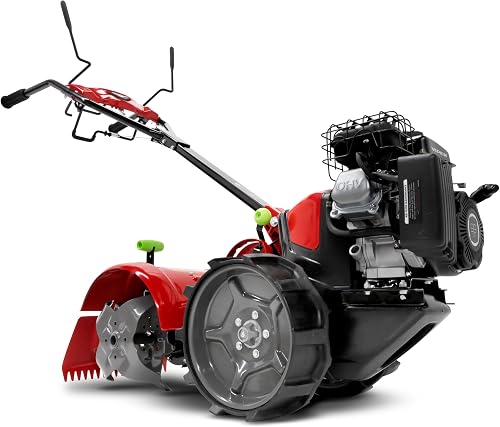 Best for changing tine direction
Earthquake Pioneer 31285 Rear-Tine Tiller
8.4/10 our score
See it on Amazon -
3

- 4
 Check it
SuperHandy 16-Inch Rear-Tine Tiller
Best for deep narrow rows - 5
 Check it
NOVUS 18-Inch Rear-Tine Tiller
Best for airless tires - 6Check it
SuperHandy 209cc Rear-Tine Tiller
Best for adjustable coverage - 7
 Check it
Pulsar 20-Inch Rear-Tine Tiller
Best for wider passes - 8
 Check it
Earthquake Pioneer 46059 Rear-Tine Tiller
Best for lighter handling
How we chose these rear-tine tillers
We compared the stated engine, width, depth, tine direction, controls and wheel details against the needs of large gardens. Our score weighs specs, features and buyer feedback against what you’re shopping for.
The Victory ranks first because its counter-rotating tines, adjustable drag stake and instant reverse address breaking soil and turning in rows. The Pioneer 31285 follows for gardeners who want to switch between counter-rotating and standard tine modes.
Width is only one part of the decision. A wider pass can reduce the number of runs, but depth and turning room matter too, especially when beds sit close to fences or paths.
| Product | Best for | Tilling width | Tilling depth | Tine direction | Our score |
|---|---|---|---|---|---|
| Earthquake Victory Rear-Tine Tiller | breaking new ground | 16 in | Up to 10 in | Counter-rotating | 8.9 |
| Earthquake Pioneer 31285 Rear-Tine Tiller | changing tine direction | 17 in | Up to 11 in | Counter-rotating and standard | 8.4 |
| YARDMAX 18-Inch Rear-Tine Tiller | dual-rotation tilling | 18 in | Dual rotation | 8.2 | |
| SuperHandy 16-Inch Rear-Tine Tiller | deep narrow rows | 16 in | Up to 12 in | Counter-rotating | 7.6 |
| NOVUS 18-Inch Rear-Tine Tiller | airless tires | 18 in | Up to 10 in | Standard and counter-rotating | 7.5 |
| SuperHandy 209cc Rear-Tine Tiller | adjustable coverage | Adjustable; exact range varies by model | 7.2 | ||
| Pulsar 20-Inch Rear-Tine Tiller | wider passes | 20 in | Up to 6.5 in | Counter-rotating | 7.1 |
| Earthquake Pioneer 46059 Rear-Tine Tiller | lighter handling | 17 in | Up to 11 in | 7.0 |
The best rear-tine tillers for big gardens
The right rear-tine tiller depends on whether your main job is opening new soil, preparing existing beds or covering ground with fewer passes. These picks are ordered by score, with the key differences called out below.
Earthquake Victory Rear-Tine Tiller: Best for breaking new ground
- 209cc 4-cycle engine
- 16 in tilling width and up to 10 in depth
- Counter-rotating tines
- Instant reverse
Counter-rotating tines are suited to tough clay, compacted soil and new ground. Instant reverse helps with turns near fences and in tight spaces.
Pros
- Counter-rotating tines
- Instant reverse handle
- Adjustable drag stake
Cons
- 16 in width is narrower than some picks
- Gas-powered
Earthquake’s Victory is the best fit here for gardeners facing compacted soil, clay or an unused plot. Its counter-rotating tines are designed to break tough ground, and the 16 in width with up to 10 in depth suits repeated passes through garden rows.
The instant reverse handle helps you turn near fences and in tight spaces without stopping to shift gears. A 3-position adjustable handlebar supports 1- or 2-handed operation, while side tine shields direct dirt away from neighboring plants.
The adjustable drag stake controls depth and helps manage tilling speed. A trailing rear shield smooths and shapes the seed bed after the tines pass.
Choose the Victory if new ground and maneuvering are your main concerns. Its 16 in width is narrower than the Pulsar’s 20 in, so it may take more passes across a broad plot.
Earthquake Pioneer 31285 Rear-Tine Tiller: Best for changing tine direction
- 99cc 4-cycle engine
- 17 in tilling width and 11 in depth
- Counter-rotating and standard tine modes
- Instant reverse
Switch between counter-rotating tines for tough soil and standard rotation for a smooth seed bed. Its instant reverse handle helps with backing up in garden rows.
Pros
- Two tine directions
- Airless wheels
- 5-year warranty
Cons
- 99cc engine is smaller than several picks
- Gas-powered
The Pioneer 31285 is the pick for gardeners who want one tiller for both breaking and finishing soil. Its counter-rotating mode tackles tough soil, while standard rotation can create a smoother seed bed.
A shift positioning system helps select the tine direction, and instant reverse lets you back up by pulling a handle. Its airless wheels avoid punctures, and the compact frame is designed for navigating tighter growing spaces.
The 17 in width and stated depth of up to 11 in give it a useful balance for garden rows. Earthquake backs it with a 5-year warranty and US-based service and support.
Choose it when switching tine directions matters more than having the largest engine. The 99cc Viper engine is smaller than the engines on several other picks, so consider the kind of ground you need to work.
YARDMAX 18-Inch Rear-Tine Tiller: Best for dual-rotation tilling
- 18 in tilling width
- 209cc or 212cc engine depending on production timing
- Dual rotating tilling
This gas tiller pairs an 18 in width with dual rotating tilling. Its engine displacement may be 209cc or 212cc depending on production timing.
Pros
- 18 in tilling width
- Dual rotating tilling
Cons
- Engine displacement varies by production timing
- Tine modes and depth aren't specified
YARDMAX pairs an 18 in width with dual rotating tilling, making it a middle-width option for garden beds. Its engine displacement may be 209cc or 212cc, depending on production timing.
That width sits between the 16 and 20 in options here. If you have long rows but still need to work around beds, fences or paths, an 18 in pass may be easier to place than the widest option.
Choose this model if its stated width and dual rotation match your layout. Its description doesn't specify tilling depth or the tine modes, so compare the Victory or Pioneer 31285 if you need those details.
SuperHandy 16-Inch Rear-Tine Tiller: Best for deep narrow rows
- 7HP engine
- 16 in width and 12 in depth
- Counter-rotating tines
- Three height-adjustable handles
A stated tilling depth of up to 12 in makes this a fit for gardeners who need deep passes. Its 16 in width is narrower than the 18 and 20 in options.
Pros
- Up to 12 in tilling depth
- Three height-adjustable handles
- Depth stake adjusts tilling depth
Cons
- 16 in width covers less ground per pass than wider picks
- Gas-powered
The SuperHandy 16-Inch Rear-Tine Tiller is suited to gardeners who want a stated depth of up to 12 in. Its counter-rotating tines are specified for a 16 in width, and three height-adjustable handles let you change the handle position.
The depth stake adjusts tilling depth, and the machine has 13 in inflatable tires. Its maker describes the design as compact and portable, with modes for switching the wheels between neutral and drive.
Choose it when deep tilling is a priority and a narrower working width fits your rows. For more width or a second tine direction, compare the NOVUS 18-Inch and Earthquake Pioneer 31285.
NOVUS 18-Inch Rear-Tine Tiller: Best for airless tires
- 212cc 4-cycle gas engine
- 18 in width and up to 10 in depth
- Standard and counter-rotating tine modes
- Airless tires
Choose between standard and counter-rotating tines, then adjust depth across 8 positions. Airless tires and a full gear transmission are also part of its design.
Pros
- Two tine directions
- 8-position depth adjustment
- Airless tires
Cons
- Gas-powered
- 2-year warranty
The NOVUS 18-Inch is a fit for gardeners who want to switch between standard and counter-rotating tines. It reaches up to 10 in deep, with an 8-position depth adjustment and airless tires.
Two forward speeds and one reverse help with movement around the garden. The 1- or 2-handed handlebar also gives you a choice of how to guide it through a row.
NOVUS describes the model as having a full gear transmission and provides a 2-year warranty with lifetime technical support. Its 18 in width gives it more coverage per pass than the 16 in picks.
Choose this tiller if adjustable depth and airless tires are priorities. Check that the 18 in width fits your access paths and bed layout before buying.
SuperHandy 209cc Rear-Tine Tiller: Best for adjustable coverage
- 7HP 209cc engine
- Adjustable tilling width and depth
- Hardened steel tines
- Centrifugal friction clutch
Its adjustable width and depth are intended to suit both larger plots and smaller garden spaces. Confirm the exact width range for the model you plan to buy.
Pros
- Adjustable width and depth
- Hardened steel tines
- Centrifugal friction clutch
Cons
- Exact width range varies by model
- Tine direction isn't specified
This SuperHandy model is worth considering when you need adjustable tilling width and depth for different parts of a garden. Its 7HP 209cc engine, hardened steel tines and centrifugal friction clutch are specified, but the width range varies by model.
The range matters if you need one setting for open beds and a narrower setting near established plants. Confirm the width range and check the manual for operating and maintenance instructions.
Choose it if adjustability is useful and you can confirm the model’s dimensions before buying. The product description doesn't specify a tine direction, so compare another pick if that feature is a must.
Pulsar 20-Inch Rear-Tine Tiller: Best for wider passes
- 212cc 4-cycle engine
- 20 in tilling width
- Counter-rotating tines
- Up to 6.5 in depth
The 20 in width covers more ground per pass than the other picks, while its stated tilling depth is up to 6.5 in. A built-in depth regulator helps maintain a consistent depth.
Pros
- Widest stated tilling width here
- Built-in depth regulator
- Forward and reverse controls
Cons
- Up to 6.5 in tilling depth
- Gas-powered
The Pulsar offers the widest stated pass here at 20 in, with counter-rotating tines and a depth of up to 6.5 in. A built-in depth regulator is designed to maintain a consistent depth with each pass.
Its 212cc 4-cycle engine runs on gasoline, and the machine has forward and reverse controls. Large tractor-style wheels have neutral and drive cotter pin settings.
Choose it for broad, relatively shallow passes across a large bed. If you need deeper tilling, the Victory, Pioneer 31285 or SuperHandy 16-Inch have greater stated maximum depths.
Earthquake Pioneer 46059 Rear-Tine Tiller: Best for lighter handling
- 127cc Briggs and Stratton 4-cycle engine
- 17 in width and 11 in depth
- Counter-rotating and standard tine modes
- Instant reverse
This Pioneer pairs dual tine directions with instant reverse and a stated weight of 143 lb. Its lower, wider body and forward-facing engine are described as supporting stability.
Pros
- Counter-rotating and standard tine modes
- Instant reverse handle
- Airless rubber tires
Cons
- Gas-powered
- Engine is smaller than several picks
The Earthquake Pioneer 46059 is a fit for gardeners who want dual tine directions with a stated weight of 143 lb. Counter-rotating mode is designed for tough soil, while standard rotation suits maintaining existing beds.
Its 127cc Briggs & Stratton engine pairs with a 17 in width and up to 11 in depth. Instant reverse helps with tight turns, and airless rubber tires have aggressive tread blocks for traction.
A 3-position handlebar and 1- or 2-handed controls give you options for guiding the tiller from either side. Earthquake specifies a 5-year limited product warranty and a 2-year limited engine warranty.
Choose it if you want a Pioneer with a lighter stated weight and dual tine modes. Compare its engine size and warranty terms with the Pioneer 31285 before choosing between them.
What should you compare before choosing a rear-tine tiller?
Compare tine direction, tilling width and depth first, because those features shape how the machine handles your garden. Then check reverse controls, tire type and the room you have for storage and turning.
How do tine directions change tilling?
Counter-rotating tines turn against the direction of the wheels and are intended for breaking tough ground. Standard rotating tines can help create a smoother seed bed, so a dual-direction model can cover both jobs.
If you mainly open new ground, the Victory has counter-rotating tines. If you want both modes, the Pioneer 31285, Pioneer 46059 and NOVUS offer dual directions.
Is a wider tiller always better for a big garden?
A wider tiller covers more ground with each pass, but it also needs room to turn and work between beds. The Pulsar has a stated 20 in width; the Victory and SuperHandy 16-Inch are 16 in wide.
Measure gates, paths and the spacing between rows before choosing. If your garden has several narrow beds, the widest machine may be harder to place.
How much tilling depth do you need?
Choose a depth based on whether you are preparing new soil or maintaining an established bed. These models state maximum depths from 6.5 to 12 in, but you can work more gradually when soil is hard.
A few shallow passes may be easier to control than forcing the machine to full depth at once. Follow the tiller's depth controls and manual.
What should you check about controls and tires?
Reverse control can help when turning at the end of a row or backing away from a fence. The Victory and Pioneer models use an instant reverse handle, while the Pulsar has forward and reverse controls.
The Pioneer 31285, Pioneer 46059 and NOVUS have airless tires. The Victory and SuperHandy 16-Inch have pneumatic or inflatable tires, which need air.
Which rear-tine tiller should you choose?
Choose the Victory if you want an option for breaking tough soil and making tight turns. Pick the Pulsar for a wider pass, the Pioneer 31285 for two tine directions, or the SuperHandy 16-Inch when a 12 in maximum depth is useful.
Before you buy, measure your paths and compare the tilling depth with the beds you plan to prepare. For help choosing among machine styles, read our guide to choosing a garden tiller and our guide to when you should till a garden.
Our top 3 picks at a glance
-
1
-
2
Best for changing tine direction
Earthquake Pioneer 31285 Rear-Tine Tiller
8.4/10 our score
See it on Amazon -
3
Frequently asked questions
What makes a rear-tine tiller a good choice for a big garden?
A rear-tine tiller can help break new ground and prepare larger beds. For a large garden, compare the tilling width, depth, tine direction and how easily you can turn at row ends.
A wider pass can cover ground faster, while a narrower machine may suit tight rows.
Are counter-rotating tines better for new ground?
Counter-rotating tines turn opposite the wheels and are suited to breaking new ground and tough soil. The Earthquake Victory and Pioneer models here offer that mode.
For ongoing bed upkeep, standard rotating tines can leave a smoother seed bed on models that support both directions.
How wide should a rear-tine tiller be?
Choose a width that balances coverage with the space between your rows and obstacles. These picks range from 16 to 20 in where a width is stated.
A 20 in pass covers more ground each run, but measure gates and working paths before choosing a wider machine.
How deep should you till a garden?
The right depth depends on the bed and the work you need to do. Several tillers here reach 10 or 11 in, while the Pulsar is specified for up to 6.5 in and the SuperHandy 16-Inch for up to 12 in.
Start shallow and increase depth over multiple passes if the soil is compacted.
Should you choose a gas or electric tiller?
Gas rear-tine tillers suit buyers who want a larger machine for heavier soil work and don't mind fuel and engine upkeep. Electric tillers are generally smaller and easier to store, but may be better suited to established beds.
Compare the best gas rototillers and our gas vs electric tiller guide before deciding.


