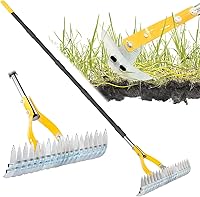
How Do Lawn Dethatchers Work?
Lawn dethatchers work by dragging angled steel tines through the top layer of your lawn to pull up dead stems and matted plant material, which is called thatch. Electric models spin the tines with a motor, tow-behind models pull them behind a tractor, and manual rakes rely on your own effort.
On this page (9 sections)
- What does a dethatcher actually remove?
- How do powered dethatchers work?
- How do tow-behind dethatchers work?
- How do manual dethatching rakes work?
- How deep should the tines go?
- Electric or tow-behind: which one works for your yard?
- When and how should you dethatch?
- Common mistakes that stop a dethatcher from working
- So, how do lawn dethatchers work?
Lawn dethatchers work by dragging angled steel tines through the top layer of your lawn to pull up dead stems and matted plant material, which is called thatch. Electric models spin the tines with a motor, tow-behind models pull them behind a tractor, and manual rakes rely on your own effort.
The tines are the whole trick. They bite into the spongy brown layer sitting between the green blades and the soil, lift it loose, and either collect it in a bag or leave it on the surface for you to rake up.
Knowing how lawn dethatchers work helps you choose the right tool and set it to the right depth.
What does a dethatcher actually remove?
A dethatcher removes thatch, the layer of dead grass stems, roots and runners that builds up between the live grass and the soil. It does not remove soil, and it shouldn't rip out healthy green blades.
Thatch is normal in small amounts. A thin layer protects the soil and crowns from heat and cold.
The trouble starts when dead stems pile up faster than they break down, which happens in lawns with heavy clay soil, too much fertilizer or a lot of watering.
When thatch gets thick, it forms a mat that sheds water and blocks air. Grass roots stay near the surface and become shallow and thirsty.
The tines break up that mat so water, nutrients and oxygen can reach the soil again.
The debris you pull up looks like brown straw and dry plant fiber. On a heavy lawn it can fill a collection bag quickly, which is why many powered models include one.
How do powered dethatchers work?
Powered dethatchers work by turning a row of steel tines on a shaft, either with an electric motor or a gas engine. As the machine moves forward, the spinning tines rake through the top layer and flick the dead material up into a bag or onto the lawn.
A corded unit like the WEN DT1516 uses a 15-amp motor turning up to 3,300 RPM with a 16-inch clearing path.
A cordless dethatcher runs on battery packs for yards away from an outlet. Our guide to the best cordless dethatcher covers that trade-off.
The working depth matters more than the speed. The WEN DT1516 offers five height settings, from +1/4 to -1/2 inch, so you can start with a light skim and go deeper from there.
A shallow setting is the safe starting point for any lawn.
Powered models usually have two kinds of head. A dethatching head uses stiff wire tines to pull up dead material.
A scarifying head uses blades to cut into the soil and loosen moss and matted roots. The WEN DT1516 ships with both heads and lets you swap them.
How do tow-behind dethatchers work?
Tow-behind dethatchers work by hitching a steel frame to a garden tractor or riding mower so the spring tines drag across the lawn as you drive. The weight of the frame pushes the tines into the thatch, and the forward motion pulls the dead material up.
There is no motor on the dethatcher itself. The tractor supplies the power and the speed, and the tines do the rest.
That makes tow-behind units cheap to run and simple to store, and the work gets done while you mow.
A lever on top of the frame raises and lowers the tines, so you can lift them for a turn or a trip across the driveway without leaving the tractor seat. Depth comes from how far you lower the tray plus how much weight sits on it.
Tow-behind models suit larger, flatter lawns where a tractor already does the mowing. On tight, sloped or heavily landscaped yards, the turning circle gets awkward.
Our guide on whether tow-behind dethatchers really work digs into that fit.
The Agri-Fab 45-0294 carries a 40-inch deck and 20 heat-treated spring tines. The frame is heavy-gauge steel, and the wheels are 7-inch semi-pneumatic tires that roll over most terrain.
How do manual dethatching rakes work?
Manual dethatching rakes work by pulling stiff tines through the turf under your own power. The tines hook the dead layer and drag it toward you, and you rake the loosened thatch into piles afterward.
The effort is real. A manual rake suits small lawns, touch-up spots and lawns where you want close control over how hard the tines bite.
It also avoids a motor, a cord or a battery.
The Groundskeeper II takes a different approach to the usual flat rake. Its round, hardened steel tines are angled and spring-loaded, so they dig in without you pressing down.
That lets you rake standing upright, and flipping the rake and pulling it toward you cleans the tines in one pass.
The head is 21 inches wide with 28 tines and a 55-inch fiberglass handle. It weighs about 2 pounds.
It's a good fit for a small yard or a first pass before you commit to a machine.
How deep should the tines go?
Set the tines just deep enough to pull the brown layer up, not deep enough to tear the green blades. Start at the shallowest setting and walk or drive a short strip to judge the result.
If the machine skims over the top and leaves the mat intact, lower it one notch. If it digs in and rips green grass or stalls the motor, raise it.
A healthy dethatching pass leaves the lawn looking scuffed and straw-strewn, not scalped.
On a manual rake, depth is about pressure. Let the tines rest on the surface and pull.
Pressing down hard digs into the soil and pulls out runners you want to keep.
Depth also depends on grass type. Cool-season grasses with creeping stems build thatch faster and often take a slightly deeper pass than a thin, newly seeded lawn.
A young lawn should only be skimmed, if it's dethatched at all.
Electric or tow-behind: which one works for your yard?
An electric dethatcher works best for small to medium lawns, uneven ground and yards with tight corners. A tow-behind dethatcher works best for large, open lawns where you already own a tractor.
An electric unit gives you a bag, close control and easy storage, but the cord limits your range or the battery limits your run time. Our guide on whether electric dethatchers work covers cord and battery models in more depth.
A tow-behind unit covers ground quickly and needs no outlet, but it depends on your tractor and handles best on open, flat areas. Pick based on lawn size and shape first, then on how you already mow.
For a wider comparison of the three types, our guide to choosing a lawn dethatcher covers corded, cordless and tow models side by side. If you're unsure what your lawn can take, a manual rake pass is a low-risk way to test it.
When and how should you dethatch?
Dethatch when the grass is actively growing and the thatch layer is thick, so the lawn can recover and fill back in. For most cool-season lawns that means early fall, and for warm-season grasses late spring or early summer.
Check the layer first. Push your fingers into the turf: if a spongy brown mat sits between the green blades and the soil and feels thicker than about half an inch, it's time.
Mow a little shorter than usual before you start, and dethatch on dry ground.
Go over the lawn in straight passes, then a second pass at right angles on heavy thatch. Rake up or bag the debris.
Water lightly afterward and hold off on fertilizer for a week or two so the grass can settle.
Don't dethatch a drought-stressed or newly seeded lawn. A weak lawn needs to recover first, and tearing at it while it's struggling does more harm than good.
Our lawn dethatcher guide covers the calendar in more detail.
Common mistakes that stop a dethatcher from working
Most dethatching problems come from wrong depth, wet grass or a dull or clogged head, not from the machine itself. Fix those three and a dethatcher does what it's meant to.
Running too deep is the big one. It pulls green grass, strains the motor and leaves bare patches.
Keep to the shallow settings and let the tines skim the dead layer.
Dethatching wet grass is the second. Wet thatch clumps, clogs the tines and won't lift cleanly.
Wait for dry weather.
The third is expecting one pass to fix a heavy mat. Thick thatch often needs a cross pass and a proper cleanup afterward.
Clean the tines and the bag when you're done, and check the head for wear.
The WEN DT1516 has automatic overload shutdown that stops the motor on contact with hard rocks or concrete. That shutoff is there to protect the motor and the blades.
So, how do lawn dethatchers work?
Lawn dethatchers work by pulling dead thatch up from the top layer of your lawn with steel tines, so air and water reach the soil again. The type of dethatcher changes how the tines are powered, not what they do.
For most home lawns, a corded electric machine gives you the most control and the least physical strain. Pick a tow-behind unit if you mow a large, open lawn on a tractor, and a manual rake for small yards and spot work.
Set the depth shallow, dethatch dry grass, and clean up the debris when you finish.
Frequently asked questions
Does dethatching remove dead grass or living grass?
It's meant to remove the dead layer, the brown stems and matted runners between the soil and the green blades. Healthy green growth should slide past the tines.
If you tear out green grass, raise the depth setting or wait until the lawn has recovered.
How do I know if my lawn needs dethatching?
Check the top layer by hand. Push your fingers into the turf and see whether a spongy brown layer sits between the green blades and the soil.
If thatch feels thicker than about half an inch, dethatching is worth planning.
Can I dethatch a wet lawn?
No. Wet thatch clumps, smears into the tines and is far harder to pull.
Wait until the grass and thatch are dry, usually after a few rain-free days, so the material lifts cleanly and collects well.
What is the difference between dethatching and scarifying?
Dethatching lifts the dead layer sitting on top of the soil. Scarifying cuts into the soil surface to loosen moss, matted roots and compaction.
Some machines, including the WEN DT1516, include both a dethatching head and a scarifying head.
How often should you dethatch a lawn?
Most lawns only need it when the layer builds up, often once a year in early fall for cool-season grass. Heavy clay or thick turf may need a second pass.
Healthy, well-aerated lawns can go several years without it.
Can a dethatcher damage my lawn?
It can if you set it too deep or run it on thin, weak grass. Start shallow, keep the tines set near the surface, and dethatch when the lawn is actively growing so it can recover.
Stop if you see green blades being torn out.