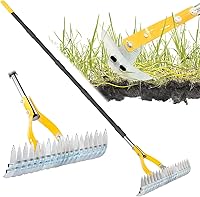
How to Use a Landhonor Power Rake
To use a Landhonor power rake, run it over dry grass in straight passes at a shallow depth, then lift the head at the end of each strip. Empty the bag often, cross the lawn a second way if thatch is thick, and finish with seed and water.
On this page (8 sections)
- How should you prepare a Landhonor power rake before its first pass?
- What depth setting should you start at?
- How do you move a power rake across the lawn?
- How do you empty the bag and handle the thatch?
- What should you do after power raking?
- How does a power rake compare with a manual thatch rake?
- What mistakes should you avoid when power raking?
- Which rake should you reach for first?
To use a Landhonor power rake, run it over dry grass in straight passes at a shallow depth, then lift the head at the end of each strip. Empty the bag often, cross the lawn a second way if thatch is thick, and finish with seed and water.
The rest of this guide walks through setup, depth, pattern, cleanup, and what to do afterward.
A power rake is a motorized dethatcher. It spins steel tines under a hood and pulls dead stems and surface debris out of the lawn.
Landhonor's version follows the same pattern as most walk-behind electric units, so the steps below apply to it and to close cousins like the machines we compared in our power rake vs dethatcher guide.
How should you prepare a Landhonor power rake before its first pass?
Assemble the handle, fit the bag, and set the head shallow before the machine touches grass. The first pass is where most lawn damage happens, so spend a few minutes getting the basics right.
Unpack the handle sections and tighten the fasteners. Check that the tines spin freely by hand and that nothing is stuck in the housing.
Fit the collection bag if your model came with one.
Set the height dial to its highest or shallowest notch for the first run. The shallow end keeps the tines just above the soil.
The WEN DT1516, for example, uses five depth settings from +1/4 inch down to -1/2 inch, and starting at the plus end is the safe choice.
Lay the extension cord out ahead of the machine, not behind it. A cord that trails into the tines is a tripping and cutting risk.
Pick a dry morning so the grass and debris are light.
What depth setting should you start at?
Start at the shallowest setting and only lower the head after a test strip. Depth is the biggest factor in whether a power rake cleans thatch or rips up healthy grass.
Run a short strip in a corner where damage would be easy to fix. Walk slowly and watch what the tines leave behind.
A good shallow pass pulls brown thatch onto the surface without tearing green blades or exposing soil.
If the tines barely touch the surface and the thatch stays put, drop one notch and try another short strip. Stop lowering once you see torn roots or patches of bare soil.
That's a sign the head is too deep for your lawn.
Keep the depth the same for the whole lawn unless the thatch layer varies. A lawn with thick thatch under trees and thin grass in the open needs two settings, not one compromise.
Change the depth dial only while the machine is off and unplugged.
How do you move a power rake across the lawn?
Walk in straight, overlapping strips and lift the head at every turn. The pattern matters as much as the depth, because a power rake works best when it moves in one direction without pivoting on the grass.
Start along one edge and walk forward at a steady pace. Let the machine pull itself; pushing hard or dragging it backward fights the tines.
Overlap each strip by a few inches so no band of lawn is missed.
At the end of each strip, lift the head before you turn. Spinning tines that pivot in place gouge the turf.
Turn on the finished side or on a path, then line up for the next strip.
On slopes, work across the face rather than straight up and down. Keep the cord on the uphill side.
How wide should your passes be?
Match your passes to the machine's clearing width. A 16-inch unit like the WEN DT1516 covers 16 inches per pass, so a 20-foot-wide lawn takes about 15 strips.
Wider machines mean fewer passes and less time, but the overlap rule stays the same.
Should you cross the lawn a second time?
Yes, when the thatch is thick. A first pass in one direction, then a second at right angles, lifts more material than either pass alone.
Skip the cross pass on thin lawns or weak grass.
How do you empty the bag and handle the thatch?
Empty the collection bag when it feels heavy or the tines start leaving debris behind. A full bag blocks airflow and lets thatch fall back onto the lawn.
Stop the machine and unplug it before you open the bag. Pull the bag off its hook and tip the contents into a garden bag or compost pile.
Thatch breaks down slowly, so mix it into compost or use it as mulch rather than leaving piles on the lawn.
If your Landhonor unit has no bag, rake the loosened thatch into rows and pick it up with a garden rake or a tarp. A light manual cleanup after the machine pass does the rest.
What should you do after power raking?
Water the lawn and give it time to recover before you seed or fertilize. Power raking thins the grass and opens the soil surface, so the lawn needs moisture and a rest period.
Water deeply right after the pass, then keep the top inch of soil moist for a week or two. Avoid heavy foot traffic and mowing until you see new growth.
If you plan to overseed, do it within a few days while the soil is still open.
Skip fertilizer for the first week or so. A light feeding after new growth appears is gentler than a heavy dose right away.
For more on the follow-up steps, see how to power rake a lawn.
How does a power rake compare with a manual thatch rake?
A power rake covers more ground in less time; a manual rake gives you more control and less risk on small or weak lawns. The right choice depends on the size of the job and the condition of the grass.
Power rakes suit larger lawns and heavy thatch. The trade-off is less feel for the soil and more risk if the depth is wrong.
Manual thatch rakes suit small lawns, thin thatch, and grass that's already stressed. You feel every pull, so it's easier to stop before you tear up roots.
Our guide to how to use a dethatching rake covers the manual method in detail.
If you're still deciding, the thatch rake vs electric dethatcher comparison lays out the trade-offs. As a rule, pick the power rake for a lawn bigger than a few thousand square feet and the manual rake for spot work.
Who should choose the WEN DT1516?
The WEN DT1516 is the strongest power-rake option here for most lawns. Its 15-amp motor spins up to 3300 RPM across a 16-inch path, and it comes with two heads: a 24-tine dethatching head and a 20-blade scarifying head.
The five depth settings run from +1/4 inch to -1/2 inch, which gives you the shallow first pass and a deeper second pass when thatch is heavy. The detachable bag catches what the tines pull up.
WEN backs it with a two-year warranty. Skip it if your lawn is tiny or you want a tool that fits in a shed corner.
Who should choose the Groundskeeper II?
The Groundskeeper II is the best cleanup rake for after the machine pass. Its 21-inch head carries 28 hardened steel tines, and the angled, spring-loaded design digs in without down pressure.
The fiberglass handle runs 55 inches, and the whole rake weighs about 2 lb. That makes it easy to sweep loosened thatch into rows.
It self-cleans when you flip it over and pull it toward you. It's not a substitute for a machine on thick thatch, but it's the right rake for gathering what the tines left behind.
Who should choose the Walensee 15-Inch Thatch Rake?
The Walensee 15-inch rake is the best manual pick for small lawns and spot work. Its 19 curved steel tines sit on a dual-sided head, so one side lifts dead grass and the other loosens topsoil.
The stainless steel handle adjusts to about 40, 55 or 70 inches, which helps taller users stand straighter. The cushioned grip keeps the rake steady during longer sessions.
At 4.6 lb it's easy to carry between beds. It's slower over a big lawn, so keep it for the corners a power rake can't reach.
What mistakes should you avoid when power raking?
The common mistakes are running too deep, working wet grass, and turning the machine on the lawn. Each one undoes the good a power rake does and costs you recovery time.
Running too deep tears roots and crowns. Set shallow first and lower only after a test strip.
Working wet grass clogs the tines and smears the soil; wait for a dry day. Turning while the tines spin gouges the turf, so lift at every corner.
Power rake when the lawn can regrow, and clear the debris the same day.
Which rake should you reach for first?
Start with the power rake for a full lawn and finish with a manual rake for the edges. A Landhonor power rake clears thatch across the open grass, and a hand rake handles the corners and the cleanup.
Pick the WEN DT1516 for the machine pass on a typical suburban lawn. Pick the Walensee for a small yard or for edges and beds.
Pick the Groundskeeper II for gathering what the power rake leaves behind. If you'd rather not run a machine at all, our manual dethatching guide shows the hand-tool method.
The order of work matters more than the brand of rake. Prepare the lawn, set the depth shallow, walk straight strips, empty the bag, water, and rest the grass.
Do that and how to use a Landhonor power rake becomes a routine fall or spring job rather than a repair project.
Frequently asked questions
What depth should a Landhonor power rake start at?
Start at the shallowest setting so the tines graze the surface and pull thatch without digging into soil. Run one test strip on a small area, then lower the head only if the tines leave the soil surface untouched and your grass is healthy and deeply rooted.
Can a power rake damage a lawn?
Yes, if the tines are set too deep or the grass is already weak. Pulling up roots and crowns exposes the lawn to drought and weeds.
A shallow first pass on a small area shows whether the tines are lifting thatch or tearing at the soil.
When is the best time to use a power rake?
Use a power rake in the growing season for your grass type, when the lawn can recover from the thinning. Cool-season grasses do well in early fall, warm-season grasses in late spring.
Avoid the hottest dry weeks and the weeks just before dormancy.
Do you have to rake the lawn after a power rake?
Yes, a light cleanup helps. Power raking leaves loose thatch and debris on the surface.
A manual rake gathers what the machine missed and the collection bag did not pick up, so the lawn gets light and air before you seed or water.
Does a power rake replace core aeration?
No. A power rake removes thatch from the surface; core aeration pulls plugs from the soil to loosen compaction.
They solve different problems.
Many lawns benefit from dethatching first and core aeration later in the same season, a few weeks apart.