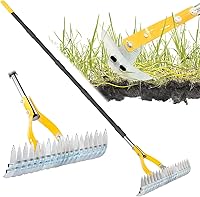
What Is a Lawn Scarifier?
A lawn scarifier is a machine that slices into the top layer of soil to pull out thatch and moss so air, water and nutrients reach the grass roots. It works more aggressively than a dethatcher, cutting grooves rather than just raking the surface.
On this page (9 sections)
- How does a lawn scarifier actually work?
- Scarifier vs dethatcher: what is the difference?
- What are the main types of lawn scarifier?
- What should you look for in a lawn scarifier?
- When should you scarify a lawn?
- How do you scarify a lawn without wrecking it?
- How do you clean up after scarifying?
- What are the benefits of scarifying a lawn?
- Which lawn scarifier should you pick?
A lawn scarifier is a machine that cuts into the top layer of soil to pull out thatch and moss so air, water and nutrients reach the grass roots. It works more aggressively than a dethatcher, slicing shallow grooves rather than just raking the surface.
If your lawn feels spongy underfoot or water pools on top, scarifying is the job that opens it back up.
Thatch is the layer of dead stems and roots that builds between the green grass and the soil. A thin layer is useful, but once it gets thick it blocks everything the grass needs.
A scarifier removes that layer and scratches the soil surface at the same time, which is why it leaves the lawn looking rough for a week or two before it fills back in.
How does a lawn scarifier actually work?
A scarifier turns a row of blades or heavy tines through the top of the soil, dragging out thatch and moss as it rolls. The cutting depth is set by a lever or dial, so you can skim the surface or bite deeper into the matted layer.
Most machines are walk-behind units with an electric motor and a collection bag.
The blades sit on a spinning shaft under the deck. As you push the machine forward, each blade flicks loose material up and back into the bag or leaves it in rows behind you.
The depth setting is the important control, because too shallow does nothing and too deep tears at healthy roots.
On the same machine, a scarifying head and a dethatching head often swap out. The dethatching head uses spring steel tines to rake the surface, while the scarifying head uses rigid blades to cut grooves.
Knowing which head you need is the difference between tidying a lawn and renovating it.
Scarifier vs dethatcher: what is the difference?
A dethatcher lifts loose thatch from the surface, while a scarifier cuts into the soil to remove thatch and moss and open the root zone. The two jobs overlap, but the scarifier is the heavier tool and the one that changes the soil surface.
Dethatching is best when the thatch layer is thin to moderate and you mainly want to lift dead material. Scarifying is for lawns with a thick spongy layer, heavy moss, or compacted ground that needs the surface broken up.
Many owners start with a dethatching pass and only move to scarifying if the lawn still feels matted. If you're unsure which your lawn needs, our guide on how often should you dethatch a lawn covers the signs and the timing for each job.
For light surface work, a manual tool and the right technique go a long way; see how to use a dethatching rake.
What are the main types of lawn scarifier?
Walk-behind electric scarifiers are the common choice for home lawns, while petrol and tow-behind models suit larger areas. Manual rake-style scarifiers exist for small lawns and tight budgets.
The type you pick depends mostly on lawn size and how often you'll use it.
Electric walk-behind models run on a cord or a battery. Corded units give steady power without charging, while cordless models free you from the cord but need a charged battery for the full lawn.
Petrol scarifiers handle bigger lawns without a cable, but they need fuel and more maintenance. Tow-behind units attach to a ride-on mower for very large areas.
For most home lawns of a few thousand square feet, a corded electric walk-behind scarifier is the simplest fit. It's light enough to push, stores upright, and the swappable heads cover both dethatching and scarifying.
If your lawn is bigger or you have no outdoor outlet, a cordless model is the better match; our roundup of the best cordless dethatchers for home lawns compares the options.
What should you look for in a lawn scarifier?
Depth adjustment, head type and working width are the three features that matter most. A machine with several depth settings lets you start shallow and work up, while a fixed-depth unit gives you no control over how hard it cuts.
Width decides how many passes you'll make.
Look for at least three or four depth positions so you can match the cut to your lawn. A collection bag saves raking, and a swappable head means one machine covers both dethatching and scarifying.
A motor with overload protection shuts down if the blades hit a rock or root, which protects the machine. A lighter unit is easier to push and lift into storage, while a heavier one can feel more stable on uneven ground.
Check the width against your lawn shape, because a wide deck is faster on open ground but harder to steer around beds and trees.
Who should choose the Greenworks 13 Amp?
The Greenworks 13 Amp 14-Inch Corded Dethatcher / suits anyone who wants one light machine with both heads for a small to medium lawn. Its 14-inch path and 13-amp motor give it enough power for a typical backyard, and the quick-release heads swap over without tools.
A 3-position depth dial covers the shallow-to-deep range most lawns need. It's also lighter than the WEN at 28.7 lb, which helps when you lift it over a step or into a shed.
Who should choose the WEN DT1516?
The WEN DT1516 16-Inch Electric Dethatcher suits a reader who wants more width and more depth settings for a larger lawn. Its 16-inch clearing path covers ground faster than a 14-inch deck, and the 15-amp motor turns the head at up to 3300 RPM.
The 5-position height adjustment runs from +1/4 inch down to -1/2 inch, so you can start with a light rake and move deeper for stubborn thatch. It comes with a 20-blade scarifying head and a 24-tine dethatching head, plus a detachable collection bag.
At 33.7 lb it's heavier than the Greenworks, so it suits someone who wants a wider pass and doesn't mind the extra weight.
Who should choose the Sun Joe AJ801E?
The Sun Joe AJ801E Electric Dethatcher suits a smaller lawn or a tight budget, where a 12.6-inch path is plenty. Its 12-amp motor covers a narrower strip per pass, so a full lawn takes more time than with the wider machines.
The 8-gallon collection bag catches the pulled material as you go, and its spring steel tines lift embedded thatch rather than just skimming it. Pick it if your lawn is compact or you want the lowest-cost way into scarifying.
At 27 lb, it's the lightest of the three.
For more low-cost options, see our roundup of the best budget lawn scarifiers.
When should you scarify a lawn?
Scarify when the grass is growing strongly, so it can recover from the cut. For cool-season grasses, that means early spring or early fall.
For warm-season grasses, late spring through early summer, after the second mowing, is the usual window.
Timing matters more than most people expect. Scarifying in a heatwave or a hard frost leaves the lawn exposed with no growth to fill the gaps.
Work on a dry day when the soil is moist but not waterlogged, and give the lawn a few weeks of growth before and after the job. If you've just seeded or laid new turf, wait until it's well established.
How do you scarify a lawn without wrecking it?
Set the blades shallow for the first pass, work in straight lines, and stop if the machine starts tearing at roots. Scarifying is meant to remove dead material and open the surface, not to strip the lawn down to bare soil.
Mow the lawn slightly shorter than usual a few days before, so the blades reach the thatch layer cleanly. Then set the depth to its shallowest position and walk at a steady pace, overlapping each pass by a few inches.
Empty the bag often so it doesn't clog and start dragging material.
Afterward, rake up any leftover debris and give the lawn water if the weather is dry. A light feed a couple of weeks later helps the grass fill back in.
Don't scarify again in the same season, because the lawn needs time to recover.
How do you clean up after scarifying?
Bag or rake the pulled thatch and moss as you go, then dispose of it or compost it. Leaving the debris on the surface smothers the grass you just opened up.
A collection bag catches most of it during the pass, but some material always escapes.
Rake the lawn afterward to lift anything the bag missed. Compost the debris in a hot heap, or add it to a green waste collection if your area allows it.
Clean the machine's blades and deck before storage and store the scarifier upright in a dry place.
What are the benefits of scarifying a lawn?
Scarifying opens the lawn so water, air and nutrients reach the roots, which supports thicker, healthier grass. It also removes moss and dead material that would otherwise keep the lawn spongy and shallow-rooted.
A scarified lawn takes water better and responds faster to feeding.
The visible change is rough at first. The lawn looks thin and striped for a week or two, then fills back in with stronger growth.
Over time, a yearly scarify keeps the thatch layer in check and makes the lawn easier to mow, because a spongy thatch layer lifts the mower deck and leaves an uneven cut.
Which lawn scarifier should you pick?
Pick the Greenworks 13 Amp for most home lawns, because its two heads, light weight and simple depth dial cover dethatching and scarifying without fuss. Choose the WEN DT1516 if you want a wider 16-inch pass and five depth settings for a larger lawn.
The Sun Joe AJ801E is the fit for a compact lawn or a smaller budget, where its narrower 12.6-inch path still gets the job done. A lawn scarifier is the tool that opens up a matted lawn, and the right one for your lawn size is the one you'll actually use each season.
Frequently asked questions
Is a scarifier the same as a dethatcher?
No. A dethatcher rakes built-up thatch from the surface with steel tines, while a scarifier cuts into the top layer of soil to remove thatch and moss and open the lawn.
Many machines offer both with swappable heads.
Does scarifying damage a lawn?
It can if you go too deep or work on weak grass. A light pass at a shallow setting removes the debris your lawn can recover from, so test a small patch first and give the grass a few weeks to recover before any heavy work.
Do you need to collect the debris after scarifying?
Yes. Rake up or bag the pulled thatch, moss and dead grass, then dispose of it or add it to a compost heap.
Leaving it on the surface smothers the grass you just opened up.
How often should you scarify?
Once a year suits most lawns, often in spring or early fall. Lawns that build up thatch quickly may need a light second pass, while light, free-draining lawns may only need it every few years.